Blog
Successful Preliminary Phase for Tile Factory Setup in Erbil

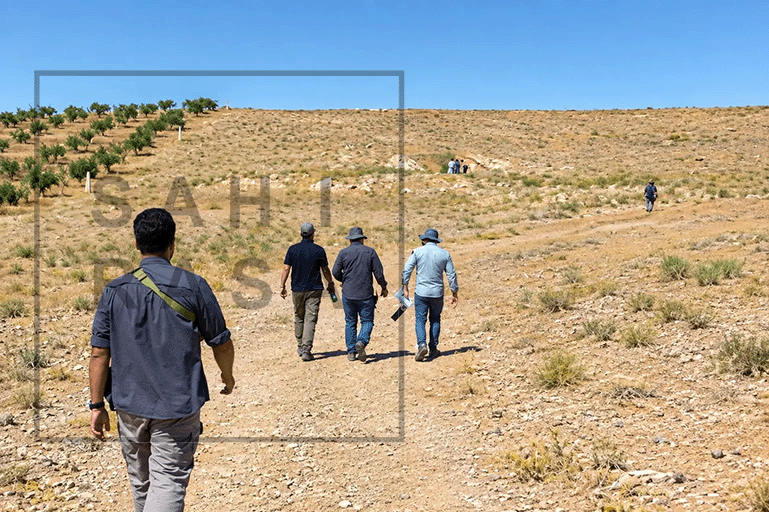
In July 2023 a key meeting took place in Erbil, the capital of the Kurdistan Region of Iraq. A private investment company , presented its vision for establishing a modern ceramic tile and porcelain factory. The industrial consulting team of Sahi Rasa, led by Business Coordination Manager and Business Development Manager , attended the session. The outcome was the formal entry of Sahi Rasa into the preliminary studies and industrial consulting phase of the project.
We are now pleased to announce that the first phase of this project has been successfully completed by Sahi Rasa’s industrial consulting team. This milestone demonstrates the company’s ability to convert an investment idea into a technically sound and executable plan under the real conditions of the Kurdistan Region. In the following pages we examine the technical details, execution stages, capacity and infrastructure specifications, and the engineering lessons of this preliminary phase from the perspective of an experienced industrial project manager.
Why the Preliminary Phase Is Critical for Tile Factory Setup in Erbil
Establishing a ceramic tile and porcelain plant, especially at high daily capacity, is a multi-layered industrial undertaking. Errors in capacity estimation, infrastructure design or equipment selection can raise operating costs for years and delay return on investment. The preliminary phase exists precisely to prevent these mistakes.
In this project we targeted a daily output of 80,000 to 100,000 square metres of porcelain tiles (50 % matte and 50 % polished). The technical targets were defined as:
- Specific pressing pressure of at least 400 kg/cm²
- Water absorption below 0.5 %
- Thickness of 12–13 mm
- Product sizes ranging from 60 × 60 cm to 120 × 280 cm
These figures formed the foundation for every subsequent calculation. Drawing on its practical experience with industrial projects in Iraq and the Kurdistan Region, the Sahi Rasa team first validated the assumptions against local market realities and available resources. Comparable executed projects can be reviewed in the company’s portfolio section.
Technical Capacity and Infrastructure Calculations
Based on the confirmed project assumptions, the key parameters were established as follows:
| Parameter | Value | Unit | Notes |
|---|---|---|---|
| Daily capacity | 80,000–100,000 | m² | 50 % matte + 50 % polished |
| Annual capacity | 24–30 million | m² | Based on 300 working days |
| Required land | 1,000,000 | m² | Approximate dimensions 800 × 1,250 m |
| Annual water demand | 600,000 | m³ | Includes granule production and process |
| Natural gas | 19,000 | m³/h | For dryers and kiln |
| Electricity | 23 | MW | Total plant requirement |
Energy calculations were performed with equal precision:
- Approximately 700 litres of water are required per tonne of granules.
- Each square metre of polished porcelain consumes 8–10 watts of electricity.
- Each square metre of unpolished matte porcelain consumes about 5 watts.
- Granule production for one square metre of porcelain (biscuit weight 25 kg) requires roughly 2.5 watts.
- Gas consumption for granule production is about 80 m³ per tonne. For each square metre of porcelain only the granule stage uses 2.5–2.7 m³ of gas.
- Total gas consumption per square metre of porcelain is 4.5–5 m³, of which half is for granules and half for drying and firing.
If natural gas is unavailable, the equivalent liquefied-gas requirement was calculated. For a capacity of 100,000 m² per day (4,160 m² per hour) approximately 161.5 million kcal of thermal energy is needed per hour. With a calorific value of 12,000 kcal per kilogram of liquefied gas, the hourly demand reaches 13,458 kg, or 323 tonnes per day (roughly 16 tankers of 20 tonnes each).
These figures guided the design of halls, lines and utilities. Kiln length was set at a minimum of 200 m, glaze line at 160–180 m, and the main hall from press to kiln end at 700 m. Press-to-kiln lines are kept straight; polishing and packaging lines are located in separate halls.
The Six Consulting Stages Covered in the Preliminary Phase
Sahi Rasa structures tile-factory consulting into six clearly defined stages. In the preliminary phase the primary focus was Stage 1 (Preliminary Studies) together with selected elements of Stages 2 and 3:
- Preliminary Studies and Feasibility
Market research, demand assessment in the Kurdistan Region and neighbouring markets (Iraq, Armenia, Georgia, Jordan, Syria and Russia), competitor analysis, technical and financial feasibility, and site evaluation. - Construction Consulting and Site Preparation
Soil investigation, overall spatial design, electrical, mechanical and piping drawings, industrial workflow optimisation, and regulatory compliance oversight. - Design and Equipment Purchase Consulting
Definition of specifications for main-line machinery (presses, dryers, kilns, glaze lines, digital printers), auxiliary equipment and structural items, plus coordination with suppliers. - Setup and Installation Consulting
Equipment integration, calibration and preparation for testing. - Equipment Delivery Consulting
Logistics planning and delivery scheduling. - Initial Production Consulting
Line start-up, quality control (hardness, bending strength, chemical resistance and colour) and optimisation.
In the present project the industrial consulting team of Sahi Rasa successfully completed the preliminary-studies stage and delivered the technical framework required for the subsequent phases. Further information on turnkey and industrial consulting services is available on the turnkey page and the business consulting page.
Practical Challenges and Engineering Solutions in the Preliminary Phase
One of the most significant risks is incorrect production-capacity estimation. Designing a plant below actual demand creates bottlenecks, high operating costs, reduced flexibility and delayed payback. Designing far above demand locks capital in unused infrastructure.
Sahi Rasa managed this risk through data-driven market analysis, scenario simulation and a ten-year development plan. The long-term plan ensures that infrastructure can be expanded and that the initial investment is not wasted.
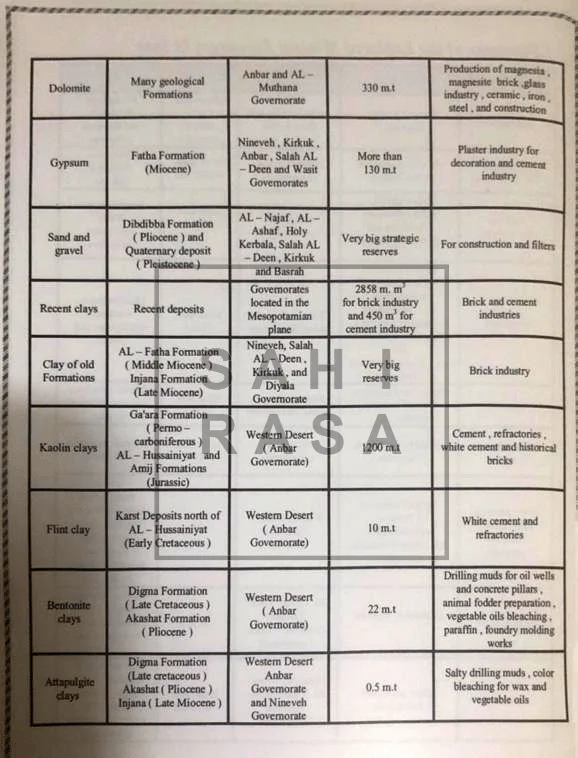
Another critical topic is supply-chain design for raw materials. Local clays in the Kurdistan Region and Iraq show considerable variation. Production lines must remain flexible enough to process different soil types without compromising product quality. Preliminary testing of sources, standardisation and process harmonisation based on available materials formed a core part of the preliminary studies.
On the energy side, the use of gas-fired kiln technology (instead of fully electric systems) was recommended to reduce cost and dependence on electricity. This approach is consistent with Sahi Rasa’s practical experience on similar regional projects.
Linkage of the Project to Regional Target Markets
The Erbil tile factory will serve not only the local market of the Kurdistan Region and Iraq but also offers export potential to Armenia, Georgia, Jordan, Syria and Russia. Proximity to raw materials and competitive energy costs create a logistical advantage.
Sahi Rasa aligned product specifications and capacity so that the plant can satisfy local demand while remaining competitive in export markets. Additional information on the supply chain and related products can be found on the order and product list page.
Achievements of the Preliminary Phase and the Road Ahead
Successful completion of the preliminary studies and industrial consulting phase means that:
- Capacity and infrastructure assumptions have been validated.
- An initial technical and financial framework has been prepared.
- Major risks have been identified and mitigation measures proposed.
- The roadmap for subsequent stages (detailed design, equipment procurement, construction, installation and pilot production) is now clear.
The investor can therefore proceed to the execution phases with greater confidence. The Sahi Rasa team remains ready to continue as industrial consultant, ensuring technical integrity and cross-disciplinary coordination throughout the remaining stages.
This project is a practical illustration of Sahi Rasa’s approach to converting an investment concept into an executable technical plan under the real conditions of the Kurdistan Region. Comparable industrial experience across the region can be reviewed on the main Sahi Rasa website and in the project portfolio.
Need The Same Service?
The preliminary phase of the ceramic tile and porcelain factory setup in Erbil has been successfully completed by Sahi Rasa’s industrial consulting team. From the initial meeting in Erbil through the precise definition of 100,000 m² daily capacity, energy calculations, the 700-metre main hall layout and the ten-year development plan, every step was executed with engineering discipline and project-management rigor.
If you are planning an investment in the ceramic tile industry in the Kurdistan Region, Iraq or similar markets, this project demonstrates that a correctly executed preliminary phase can prevent capital waste and shorten the path to return on investment.
For specialised consulting on tile-factory setup, feasibility studies or production-line design, contact the Sahi Rasa team. Requests can be submitted via the Sahi Rasa website or through the company’s email and telephone channels. Successful industrial projects begin with precise decisions in the preliminary phase.