Blog
How Sahi Rasa’s Creative Team Turned Omani Halwa into a Quick-Return Investment in Oman

In mid-2024, a routine business trip to Oman became a pivotal moment for the engineering and commercial team at Sahi Rasa. Walking through the busy markets of Muscat, the rich aroma and unforgettable flavor of traditional Muscat Halwa captured our attention. This classic Omani dessert crafted from sugar, cardamom powder, saffron, rose water, starch, and ghee—is more than a sweet treat; it is a cultural signature of Oman. Yet a practical limitation quickly emerged: Halwa could only travel as a finished product. Once consumed, the experience ended. That simple constraint sparked an engineering and commercial idea: transform authentic Omani Halwa into a versatile, easy-to-recreate format that households could prepare in their own kitchens.
As a technology-transfer and turnkey project company, Sahi Rasa took this concept from initial observation to a fully structured quick-return investment in Oman. This article details the complete journey from idea validation and product development to technical specifications, market analysis, investment options, and project execution written from the perspective of an experienced project engineer and industrial manager. The goal is to provide a clear, actionable roadmap for investors seeking fast returns in the regional food sector.
Why the Omani Halwa Idea Was Ideal for Quick-Return Investment in Oman
History shows that semi-prepared food products can scale local recipes into regional and global markets. In the 1940s, cake mixes revolutionized home baking. Within a decade, more than 200 companies launched similar products, turning regional recipes into supermarket staples thanks to convenience, long shelf life, and easy distribution. Omani Halwa sits in a comparable position today.
The market opportunity is substantial. Oman and neighboring countries represent approximately 61 million potential consumers. Oman alone welcomed more than 4 million tourists in 2023. Strong distribution potential exists in Qatar, the UAE, Iraq, the Kurdistan Region, Afghanistan, Tajikistan, Uzbekistan, Armenia, Georgia, Turkmenistan, Jordan, Syria, and even Russia. A ready-mix product with competitive pricing and good shelf life can achieve nationwide coverage in Oman and expand into neighboring markets through both supermarket chains and online channels such as Amazon UAE.
From a project-engineering standpoint, the idea offered three clear advantages for a quick-return investment:
- Relatively modest capital requirements compared with heavy industrial lines.
- Short production cycle and the ability to start rapidly via outsourcing.
- High flexibility for flavor and formula variations to match diverse regional tastes.
Sahi Rasa leveraged its experience in industrial and food projects across the region to package this concept into a complete investment proposal. For examples of similar turnkey work, see the company’s portfolio section.
From Idea to Finished Product: Research, Formulation, and Technical Development
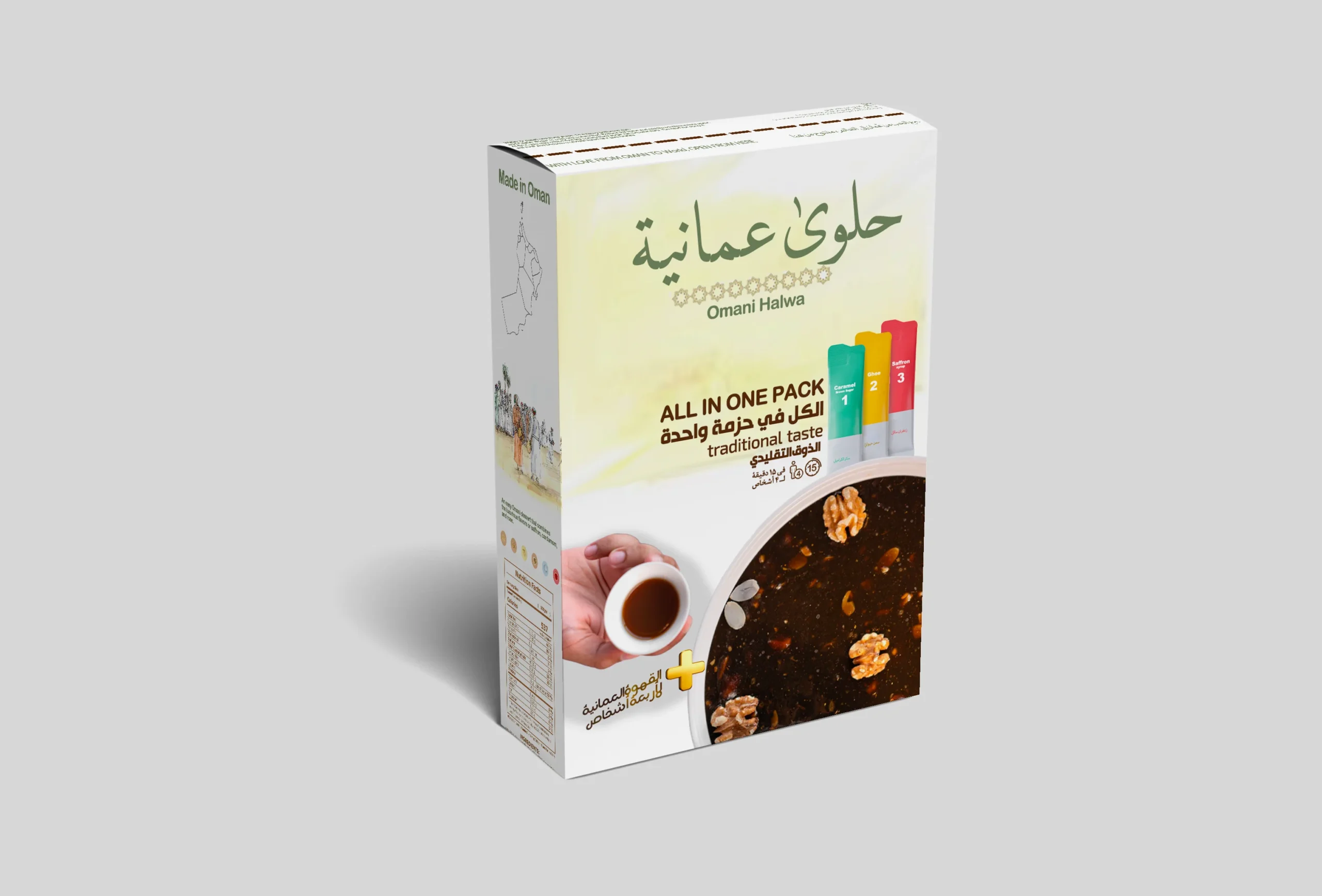
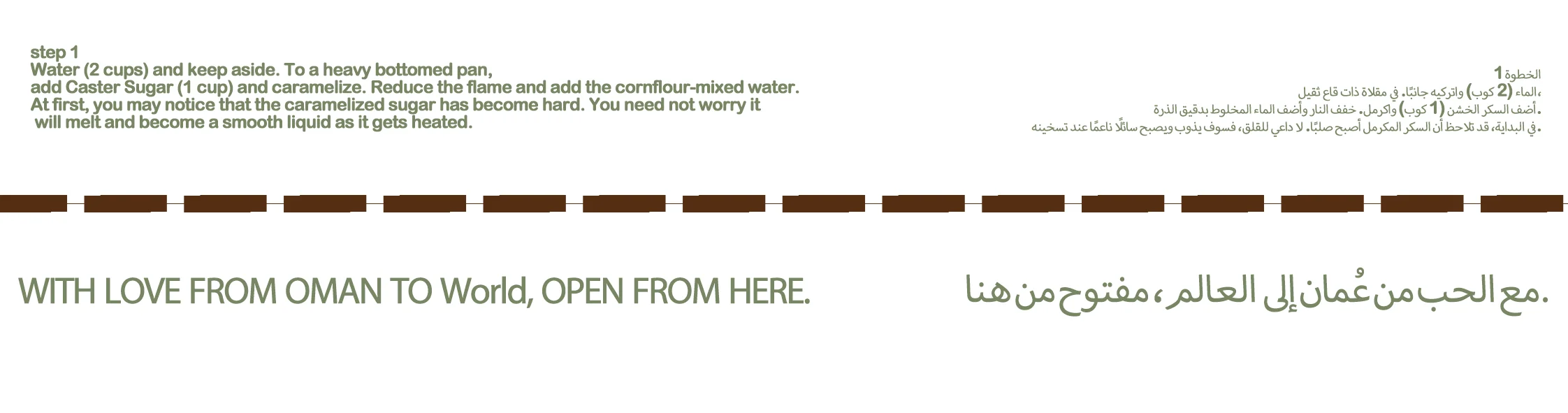
The process began with needs identification. Traditional Omani Halwa is prepared from sugar, cardamom, saffron, rose water, corn starch, and ghee. The core engineering challenge was converting this wet, time-intensive recipe into a stable dry-powder system that, with the addition of water, produces authentic Halwa for four people in just 15 minutes.
The technical team followed a structured sequence:
Capture and documentation of the authentic recipe
Multiple samples from Muscat producers were collected and analyzed. Exact ratios, traditional cooking temperatures, and ingredient addition sequences were recorded.Component separation and sachet design
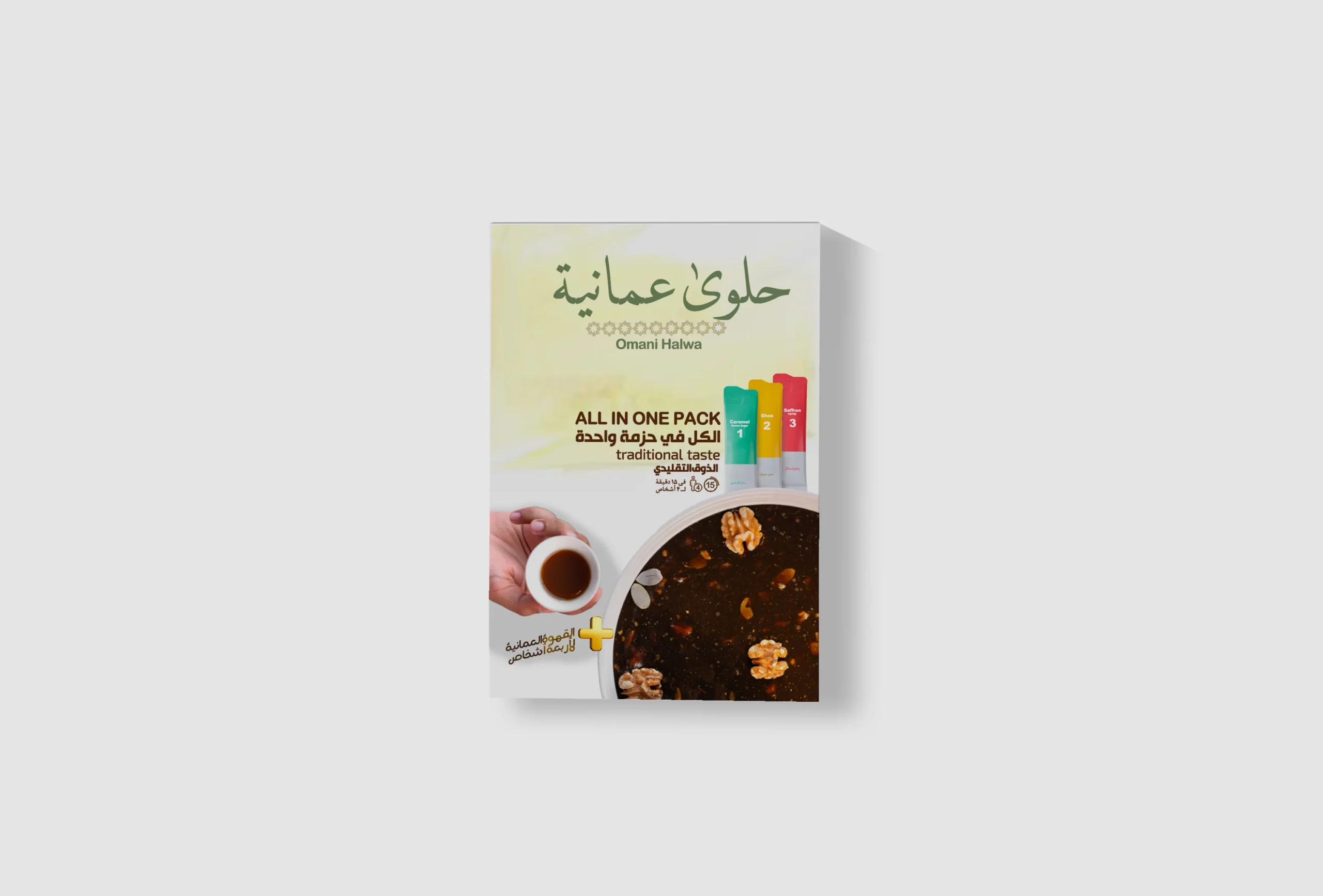
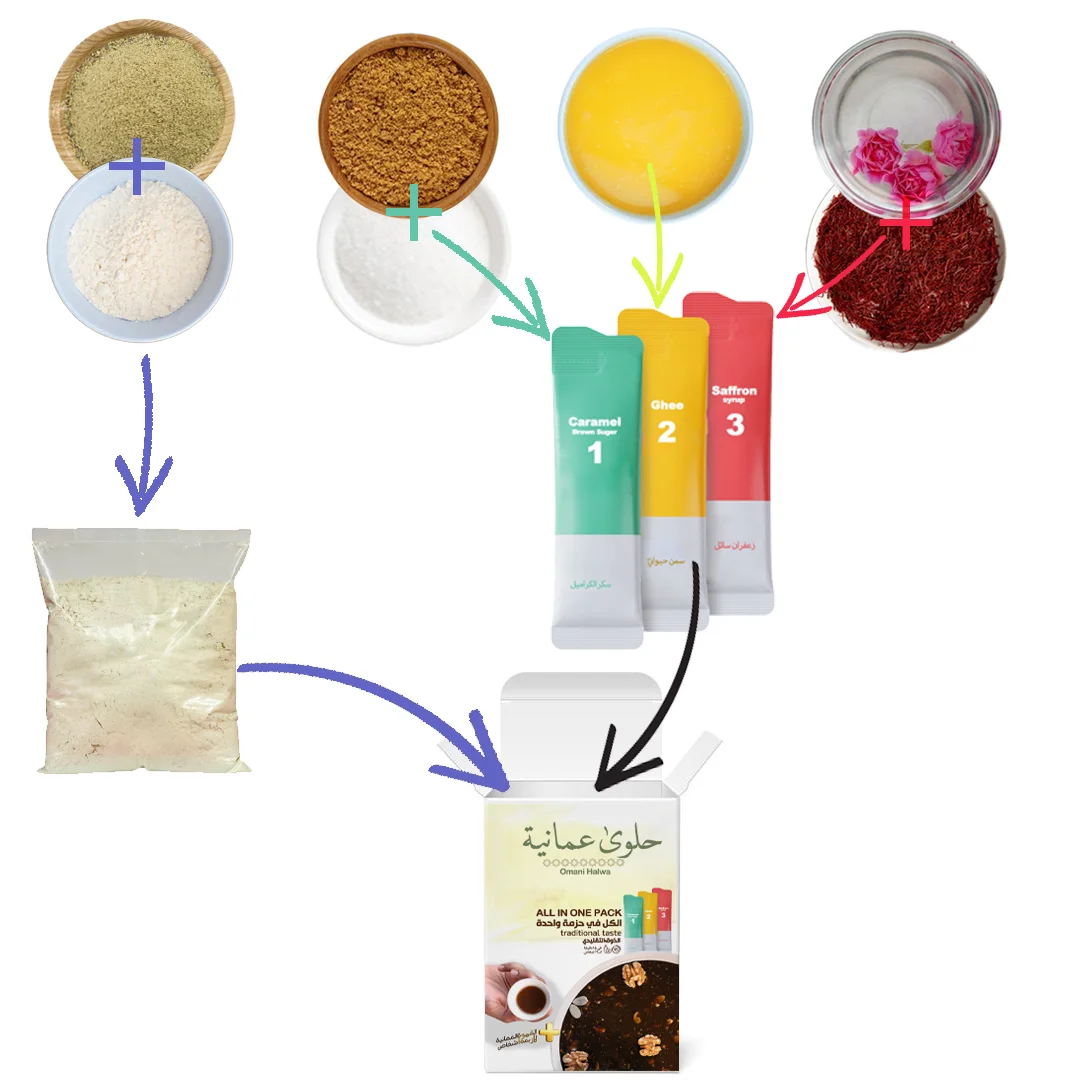
The final product was engineered as an all-in-one pack containing:- Pre-mixed corn starch and cardamom powder
- Sachet of saffron and rose-water solution
- Sachet of oil
- Sachet of ready-made sugar caramel
- Omani coffee powder included as a complimentary item
This “everything-in-one” design minimizes consumer error and guarantees consistent results.
Stability and shelf-life testing
Prototype batches were subjected to temperature and humidity cycles simulating Omani storage and regional logistics. Focus areas included prevention of caking, retention of cardamom and saffron aroma, and moisture control.Product diversity
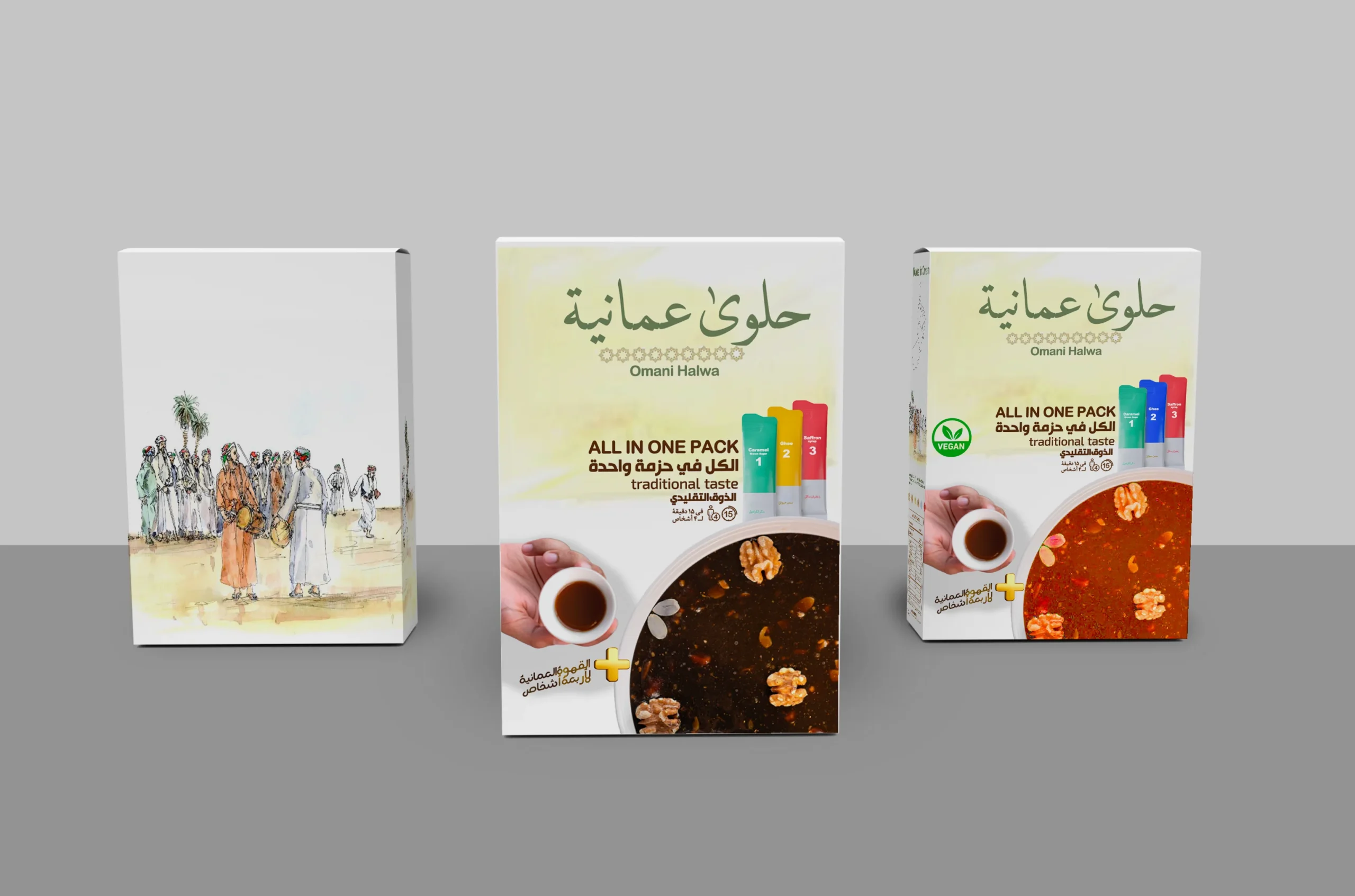
By adjusting caramel color and spice profiles, vegan versions and multiple flavor variants can be produced. This flexibility is essential for markets in Iraq, the Kurdistan Region, Afghanistan, and Central Asian countries.
The result is a product that preserves authentic taste while delivering cultural experience in a modern, convenient format. This approach mirrors technology-transfer projects Sahi Rasa has executed in other food categories. Further details on the company’s technology-transfer capabilities are available on the main website.
Product Technical Specifications and Packaging
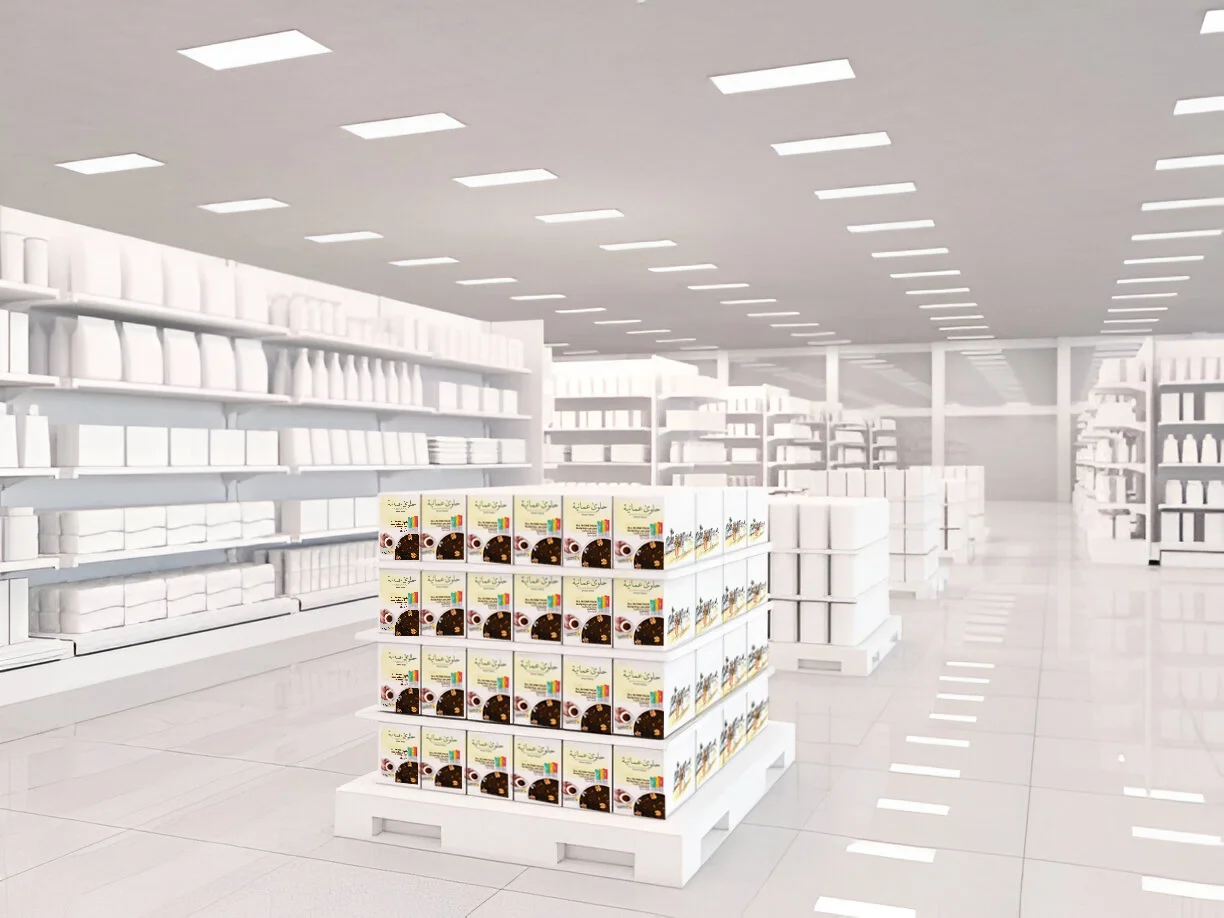
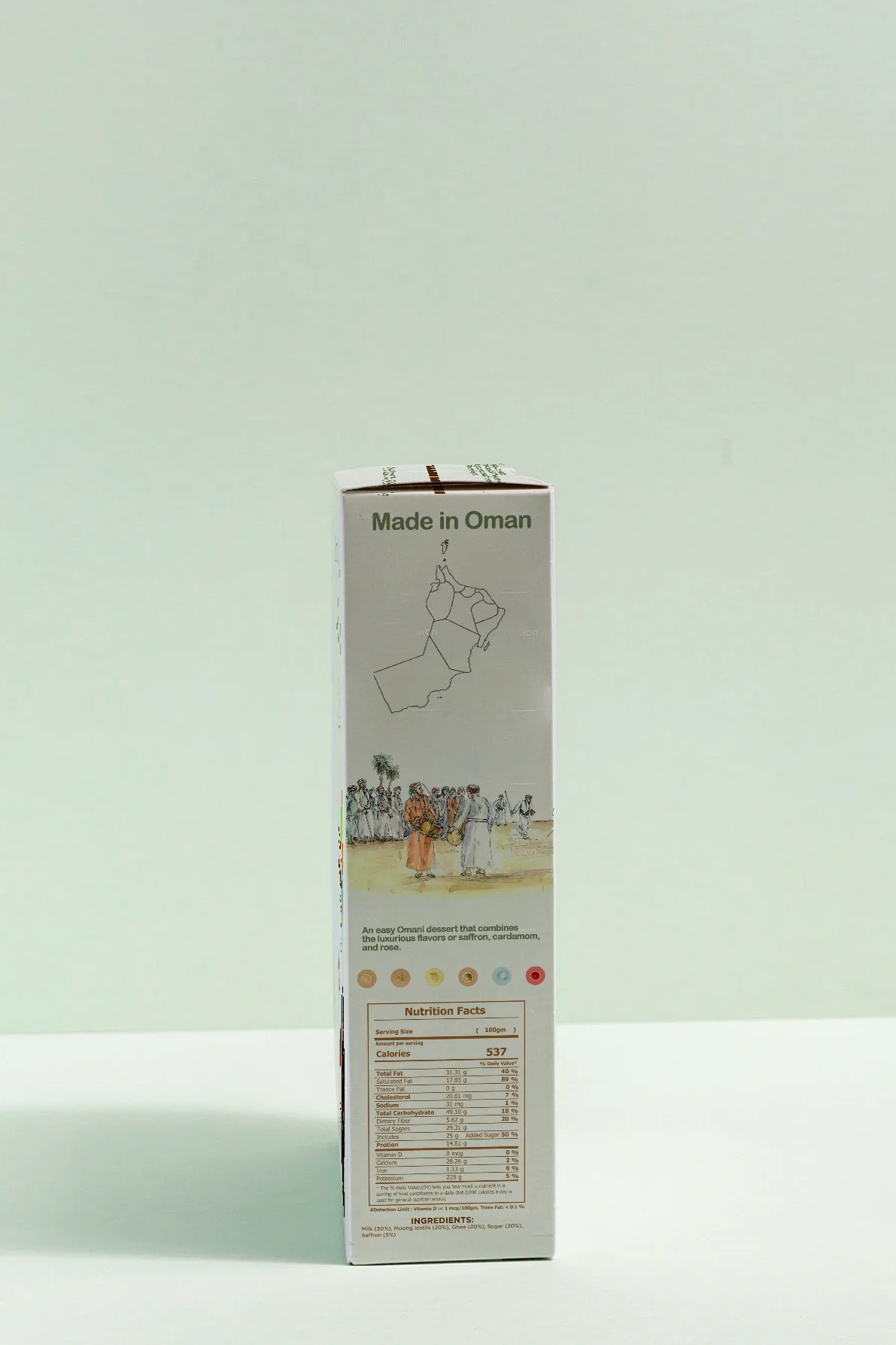
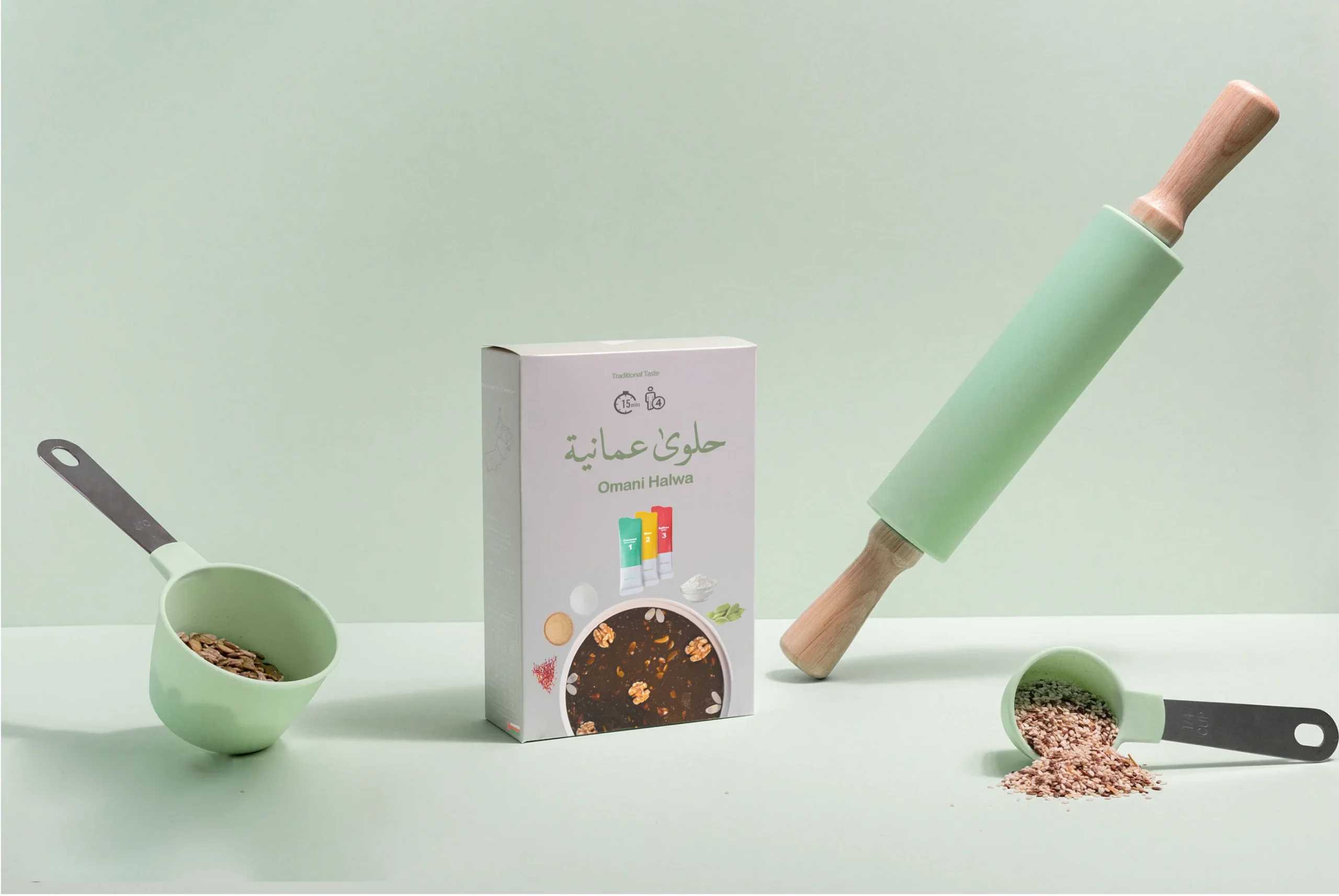
The product is a semi-ready powder formulated for home preparation. Packaging follows the format used by more than 90 % of ready-to-make cakes and desserts on the market—an intentional choice that accelerates acceptance by supermarket buyers.
Key technical features:
- Preparation time: 15 minutes
- Serving size: 4 persons
- Method: simply add water according to on-pack instructions
- Vegan versions possible through oil substitution
- Shelf life suitable for nationwide Oman distribution and export to neighboring countries
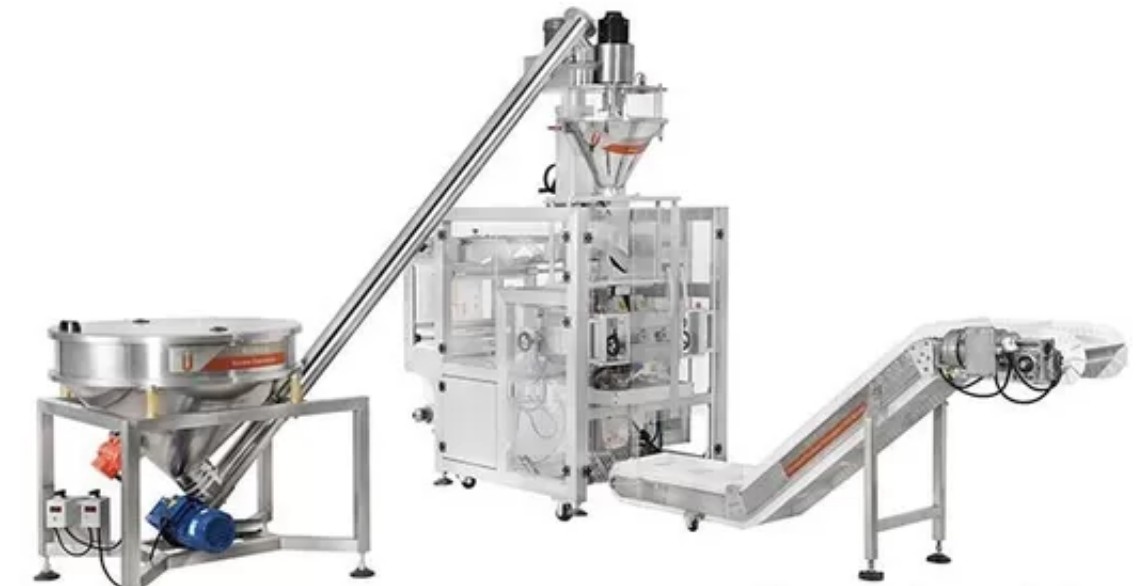
From a manufacturing-engineering perspective, the product can be produced either on a dedicated line or through outsourcing. Outsourcing benefits from competitive labor and energy costs in Iran combined with access to high-quality raw materials. Finished goods are delivered to Oman under the investor’s brand.
For comparable food-production and packaging examples, review the product list and related project references.
Two Investment Pathways: Outsourcing or Full Production Line
Sahi Rasa presents two primary routes for a quick-return investment in Oman:
Option 1 – Full Turnkey Production Line
Minimum investment approximately USD 221,000.
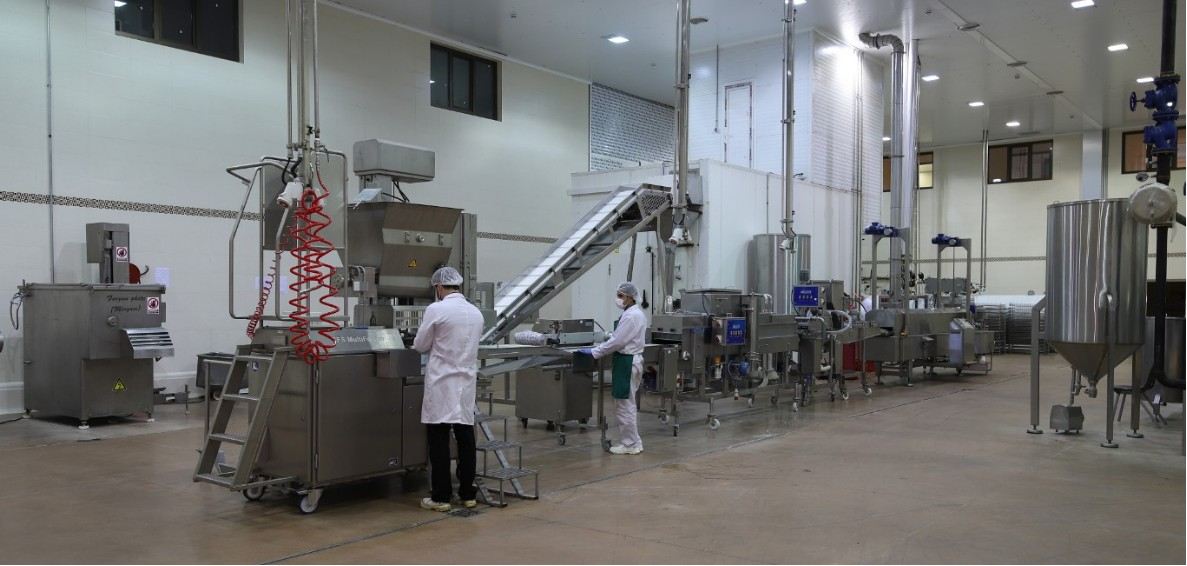
Sahi Rasa manages engineering design, equipment supply, installation, commissioning, and local-operator training through to production start-up. This route suits investors who require full quality and capacity control and plan long-term export expansion into markets such as Russia and Central Asia.
Option 2 – Outsourcing Production
Minimum investment approximately USD 115,000.
Production takes place in Iran under the investor’s brand and recipe; finished product is shipped to Oman. This path requires lower initial capital and enables faster market entry—ideal for market testing and early returns.
A trial investment option of approximately USD 10,000 is also available for pilot production and market validation.
Both pathways follow Sahi Rasa’s established turnkey project model. Additional information on this delivery approach can be found on the turnkey services page.
Market Size and Return Potential
Target markets include:
- Local Omani consumers (population ≈ 5.5 million)
- Tourists (more than 4 million annually in recent years)
- Neighboring and regional markets: Iraq, Kurdistan Region, Afghanistan, Tajikistan, Uzbekistan, Armenia, Georgia, Turkmenistan, Jordan, Syria, and Russia
Recommended distribution channels:
- National supermarket chains in Oman
- Online sales via regional platforms and international payment gateways
- Hotels and tourist-oriented restaurants
Competitive pricing combined with strong shelf life supports rapid nationwide coverage in Oman and penetration into adjacent markets. From a project-finance viewpoint, the outsourcing model can reach break-even relatively quickly, while the full production line offers higher long-term scalability and margins.
This market assessment forms part of Sahi Rasa’s business-consulting services, applied in comparable regional projects. More information is available on the business consulting page.
Project Execution Path from a Management Perspective
Sahi Rasa structures the investment process in five transparent stages:
- First Call
Introduction of the concept and initial feedback from the investor. - Negotiations
Alignment of expectations, investment capacity, and preferred model (outsourcing or full line). - Business Plan
Preparation of a detailed financial model covering profit-and-loss projections, cash-flow, ROI, working capital, and scenario analysis. Figures are refined to match the investor’s specific conditions. - Contract
Formalization of agreements and definition of Sahi Rasa’s scope (engineering, supply, supervision, or full production). - Start
Pilot production, line commissioning or outsourcing launch, and delivery of the first commercial batch.
Receipt of this proposal places the discussion at the negotiations stage. The Sahi Rasa team is ready to proceed to a customized business plan.
This staged approach mirrors industrial and food projects previously executed by Sahi Rasa in Iraq, the Kurdistan Region, and other target markets. Additional case studies appear in the project portfolio.
Technical Considerations and Practical Challenges
From an engineering standpoint, several critical points must be addressed:
- Raw-material quality control
Starch, cardamom, saffron, and rose water must meet international food standards and Oman import requirements. - Flavor stability under hot conditions
Oman’s climate demands a formulation resistant to oxidation and aroma loss. - Protective packaging
Multi-layer moisture- and oxygen-barrier packaging is essential for regional supply-chain integrity. - Regulatory compliance
Health permits and labeling must satisfy Omani regulations and those of intended export markets. - Supply-chain coordination
In the outsourcing model, synchronized production in Iran and logistics into Oman are decisive.
Sahi Rasa’s experience in regional supply chains and similar projects has already incorporated these factors into the project design. Supply and equipment services can be reviewed on the order and supply-chain page.
Call to Action
Converting the Omani Halwa concept into a complete quick-return investment project in Oman illustrates Sahi Rasa’s method: identify a genuine market opportunity, develop a technically robust product, and deliver a clear, executable turnkey solution. From the first taste in a Muscat market to the 15-minute ready-mix format, stable formulation, 61-million-person market analysis, and two transparent investment pathways, every step has been managed with engineering precision and project discipline.
The outsourcing route offers a fast path to early returns, while the full production line builds scalable capacity for broader regional export—including Iraq, the Kurdistan Region, Afghanistan, Tajikistan, Uzbekistan, Armenia, Georgia, Turkmenistan, Jordan, Syria, and Russia. The cultural essence of Oman can reach households and supermarket shelves across the region in a modern, convenient form.
If this quick-return investment opportunity in Oman aligns with your objectives, the next step is detailed negotiation and preparation of a tailored business plan. The Sahi Rasa team stands ready to accompany you from concept through production and commercialization.
To begin the conversation or request further information, visit Sahi Rasa, email , or call +989220673851. Real opportunities are realized through timely action.