Blog
Carton Factory Setup in Kurdistan Region, Iraq | Phases Completed by Sahi Rasa
In August 2023 Sahi Rasa delivered a complete investment and engineering proposal for a private-sector recycled carton factory in Sulaymaniyah, Kurdistan Region of Iraq. The plant converts locally collected waste paper and cardboard into testliner and pseudo-kraft rolls, then into single-wall and double-wall corrugated sheets, and finally into printed carton boxes manufactured to customer specifications. Design capacity is set at 50–100 tonnes of finished product per day under a semi-automated process philosophy.
Two full project phases are now complete. Phase 1 (preliminary studies, market validation and basic engineering) and Phase 2 (detailed Gantt chart, process engineering, equipment layout and complete factory design) have been finished and handed over. The investor is currently progressing through the formal licensing and permit procedures with the relevant Kurdistan Region authorities. In parallel, the upstream waste-paper collection and export operation initiated by this project has become fully operational and commercially successful.
This expanded technical report presents the engineering depth of the carton factory setup in Sulaymaniyah, the completed deliverables, the current permit status, the already-running waste-collection business, and the precise next production stages once licences are issued.
Phase 1 Deliverables – Preliminary Studies and Basic Engineering
The first phase established the commercial and technical feasibility of the project. Detailed waste-stream analysis confirmed that cardboard constitutes approximately 14 % of municipal solid waste in the Erbil–Sulaymaniyah corridor, generating a recoverable volume of 250–350 tonnes of mixed waste paper per day. Local purchase prices at the time of the study averaged 80 USD per tonne for unsorted waste paper, while a finished printed carton box sold for approximately 1 000 USD per tonne. The resulting value-added structure was quantified as follows:
- Waste collection and sorting: 70–80 USD/t
- Paper-roll production (testliner / pseudo-kraft): ≈ 280 USD/t (added value ≈ 210 USD/t)
- Corrugated sheet: ≈ 308 USD/t
- Printed carton box: ≈ 1 020 USD/t (added value ≈ 712 USD/t)
Basic engineering packages prepared in Phase 1 included:
- Complete process-flow diagrams covering the three sequential sectors
- Preliminary mass balance for fibre, water, steam and chemicals
- Utility demand calculations (steam, electricity, compressed air, process water and effluent)
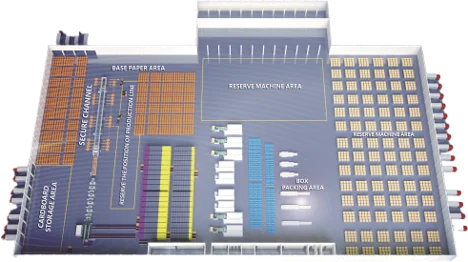
- First-pass site layout of approximately 15 850 m² total area
- Preliminary capital cost estimate distinguishing manual and semi-automated configurations
These documents provided the investor with a clear, bankable foundation before any detailed design work began.
Phase 2 Deliverables – Gantt Chart, Detailed Design and Factory Engineering
Phase 2 converted the validated concept into a fully engineered project. A multi-level Gantt chart and cash flow was developed covering every activity from permit issuance through civil construction, equipment procurement, installation, cold and hot commissioning, and commercial ramp-up. The chart identifies the critical path, resource loading, float times and contingency buffers, giving an overall project duration of approximately 18 months from contract signature to stable production.
Detailed design packages completed in this phase comprise:
- Final process-flow diagrams with material and energy balances at every unit operation
- Precise equipment arrangement drawings showing unidirectional material flow from bale storage through pulping, cleaning, refining, sheet formation, corrugating, printing, slotting, die-cutting, folding-gluing and automatic strapping
- Civil and structural specifications for production halls, heavy-machine foundations, internal roads and drainage
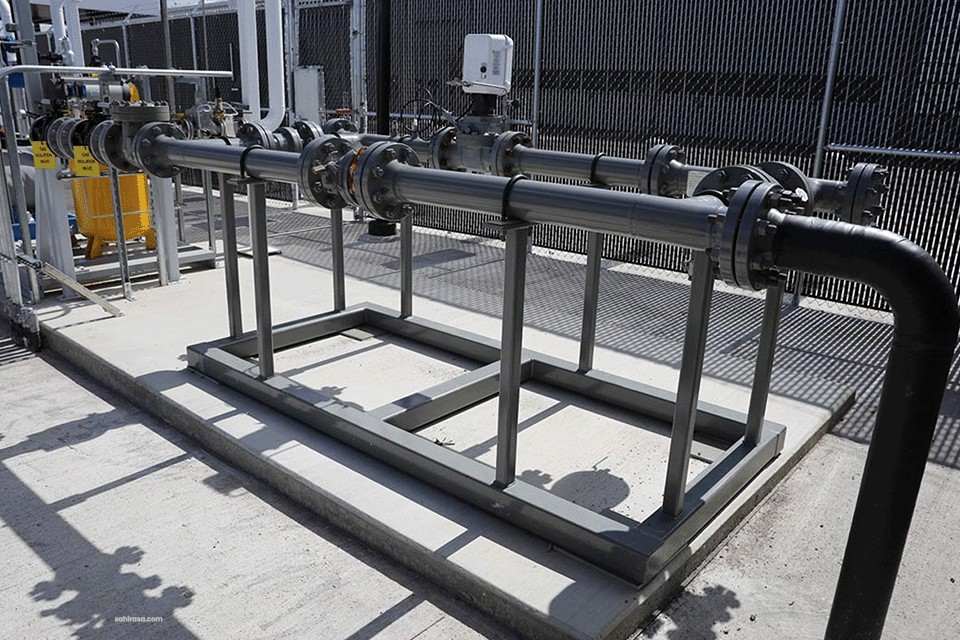
- Utility distribution drawings sized for continuous operation at design capacity
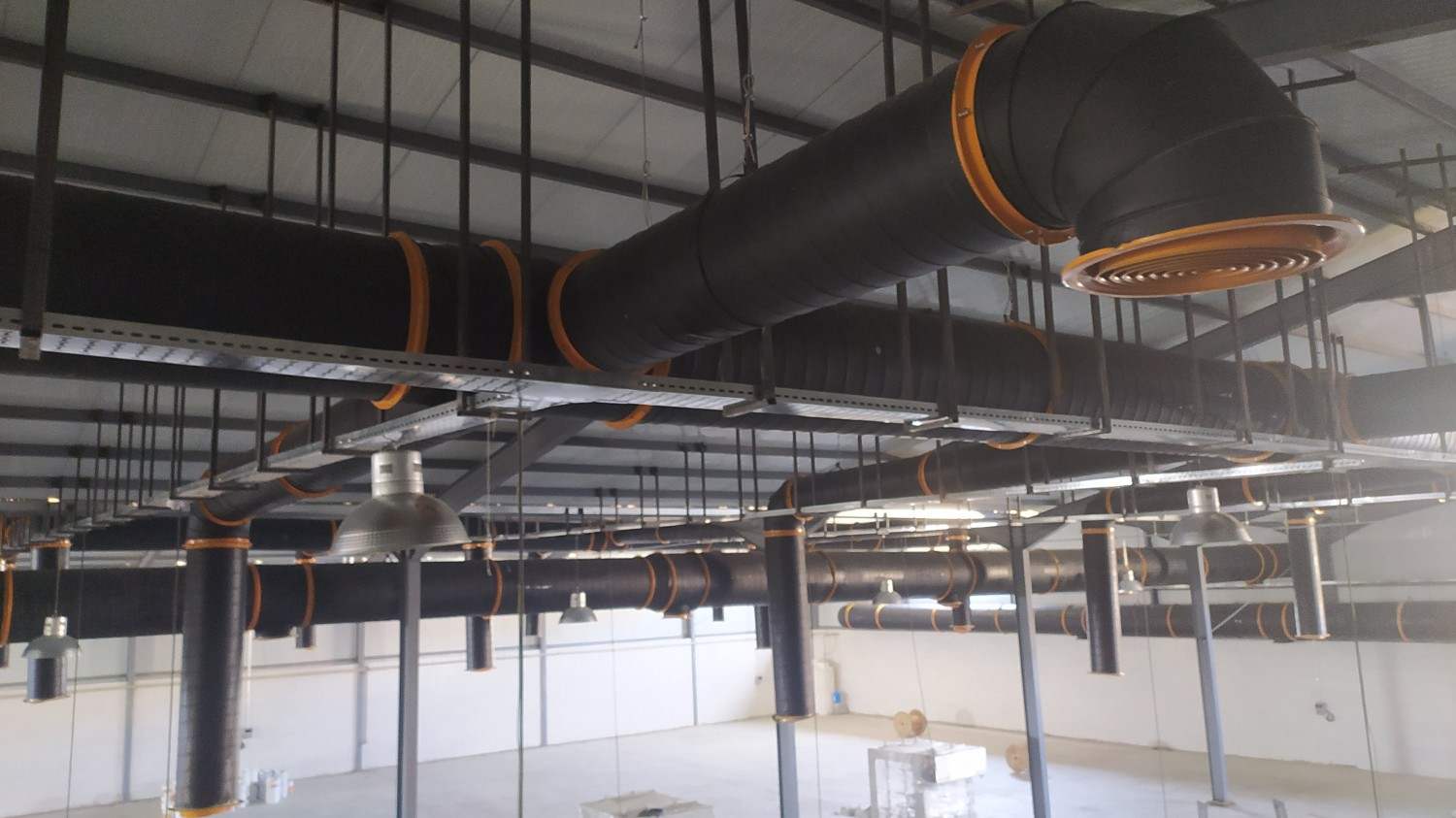
- Environmental concept covering dust extraction, noise control, wastewater treatment and solid-waste handling consistent with Kurdistan Region regulations
- Safety and ergonomic layout ensuring clear emergency routes and operator access
The design philosophy keeps continuous process lines (pulping to paper machine and corrugator) as straight as possible, while locating finishing and packaging operations in dedicated zones to minimise cross-contamination and logistics interference.
Current Project Status – Licensing and Permits
With all engineering packages complete and approved, the investor has entered the formal licensing phase. Applications for industrial operating licences, environmental impact clearance and construction permits are under review by the competent authorities in the Kurdistan Region. Sahi Rasa continues to supply technical clarification documents, process descriptions and layout drawings as requested by the regulatory bodies. Once the full set of permits is obtained, civil works and equipment ordering can commence without further engineering delay.
Parallel Commercial Achievement – Waste-Paper Collection, Pressing and Export
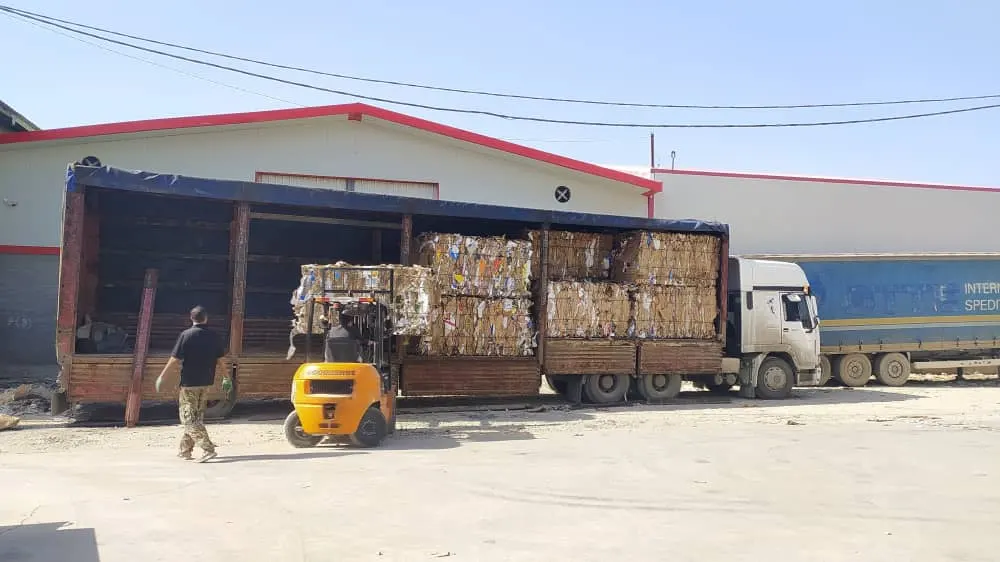
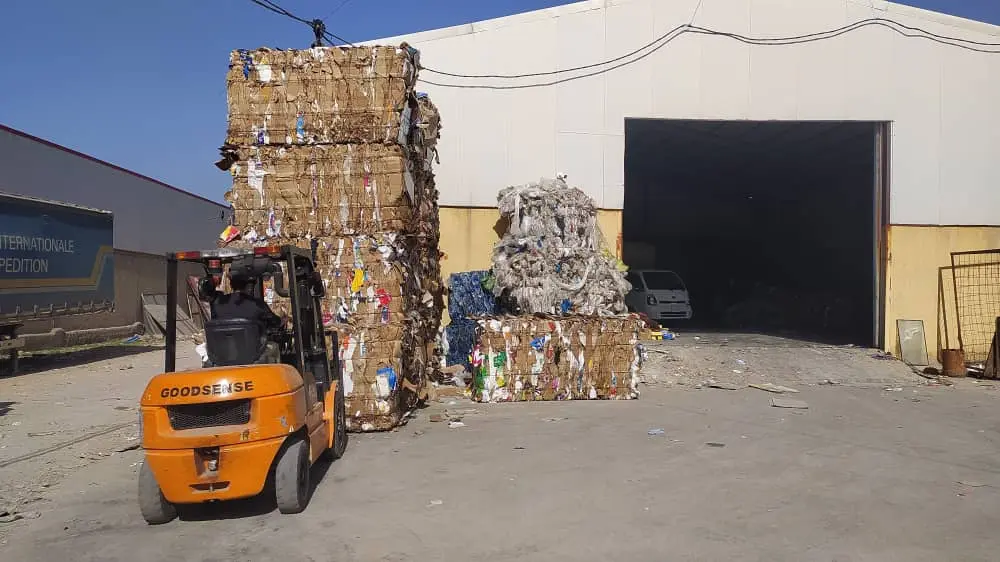
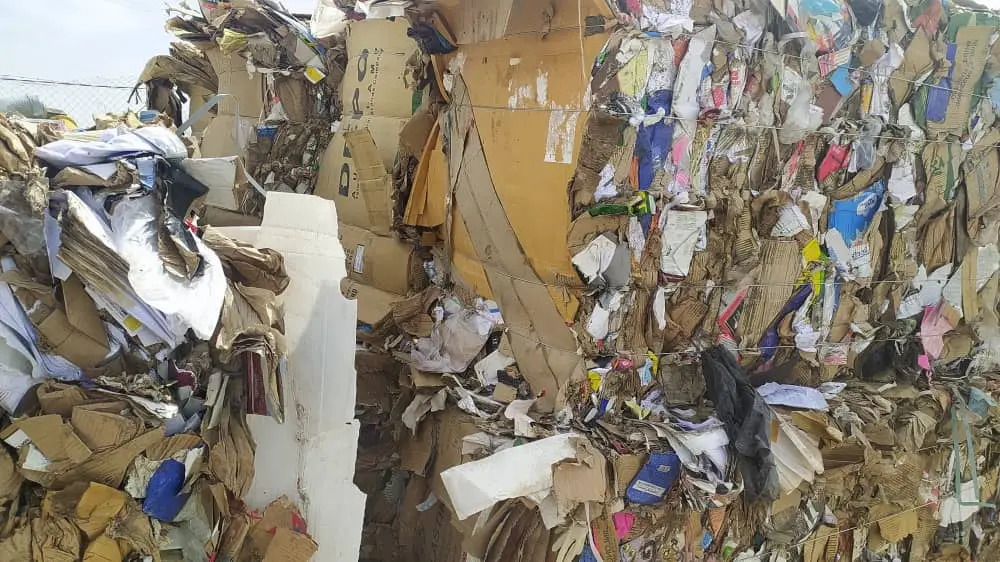
An immediate and tangible outcome of the project has been the full operationalisation of the upstream raw-material sector. Sahi Rasa’s commercial team has established a complete collection, sorting, quality-control, pressing and export chain for waste paper and cardboard across Iraq and the Kurdistan Region. Material is compacted into standardised 1-tonne high-density bales and exported primarily to established buyers in Iran and Turkey.
This activity has already established Sahi Rasa as one of the most recognised and reliable suppliers of baled waste paper and carton from the region. The operation delivers three strategic benefits:
- Immediate revenue generation while the main factory remains in the permit stage
- Secured, consistent-quality feedstock for the future pulping and sheet-making lines
- Practical operational experience in logistics, moisture control, contamination management and customer quality requirements that will transfer directly to the full plant
The commercial team continues to expand collection networks, refine baling density targets and implement stricter sorting protocols to meet the exact specifications required by downstream mills.
Technical Process Description – From Waste Bale to Finished Box
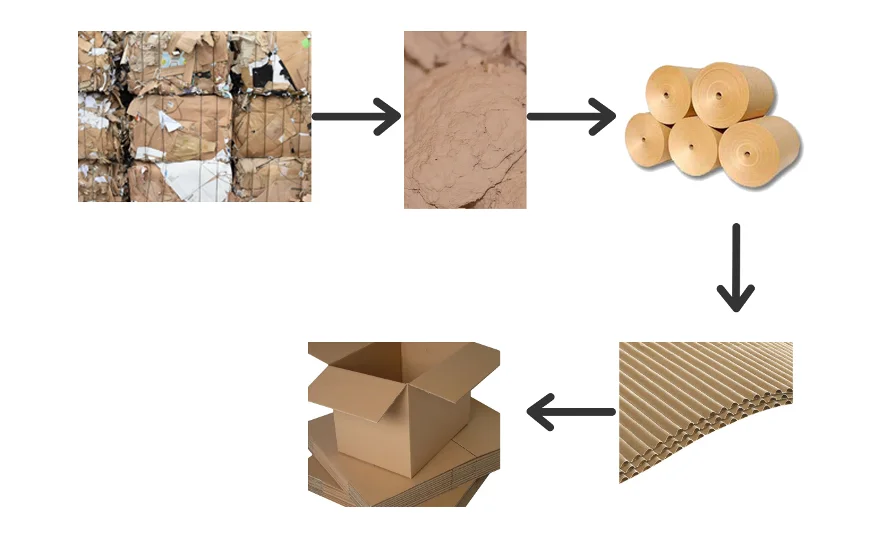
The plant is organised into three clearly defined sequential sectors.
Sector 1 – Wastepaper to Paper Roll
Incoming 1-tonne bales are opened, sorted and cleaned. Contaminants (plastics, metals, adhesives) are removed. The cleaned fibre is pulped, screened, cleaned and refined. A controlled percentage of higher-quality pulp is added to produce pseudo-kraft grades that approximate the strength and appearance of virgin kraft while remaining predominantly recycled. The pulp is formed into continuous sheets, pressed, dried and wound into rolls of testliner, liner or pseudo-kraft at the required basis weights.
Sector 2 – Paper Roll to Corrugated Sheet
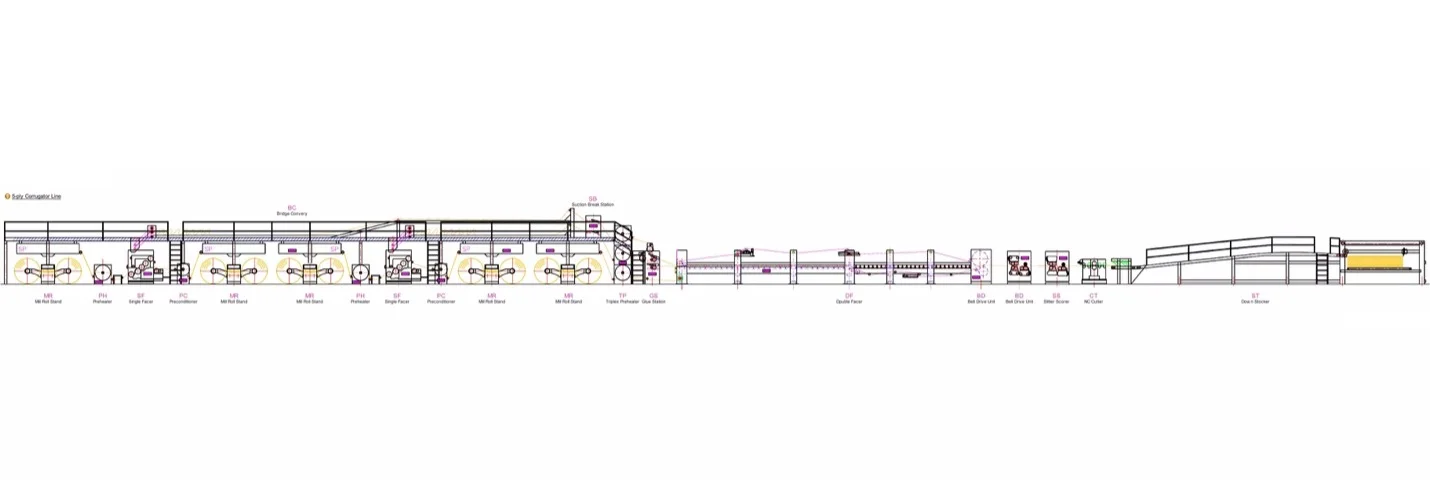
Paper rolls are unwound and conditioned. The fluting medium is passed through heated corrugating rolls to form the characteristic S-shaped arches. The fluted medium is then glued between two liner sheets to produce single-wall or double-wall board. Available flute profiles include:
- A-flute – maximum cushioning and stacking strength
- B-flute – high puncture resistance and good print surface
- C-flute – the most widely used shipping grade
- E-flute – fine flute for high-quality print and reduced pack volume
- F-flute – ultra-fine for small retail and specialty packaging
The board is then slit, scored and cut to order lengths.
Sector 3 – Corrugated Sheet to Printed Carton Box
Sheets are fed into multi-colour printing units, followed by slotting, die-cutting, folding, gluing and automatic strapping. The finishing line is designed to produce both standard shipping cases and custom die-cut constructions (display trays, pizza boxes, retail packs, etc.). Maximum box dimensions are governed by the 2 000 mm working width of the upstream paper and corrugating lines.
Capacity, Infrastructure and Manpower Summary
| Stage | Nominal Capacity | Primary Output |
|---|---|---|
| Regional waste intake | 250–350 t/day | Sorted & baled feedstock |
| Paper-roll production | up to 100 t/day | Testliner / liner / pseudo-kraft |
| Corrugated-sheet production | up to 100 t/day | 3-ply & 5-ply board |
| Printed carton boxes | up to 50 t/day (Phase 1) | Customer-specified designs |
Site requirement
- Total area ≈ 15 850 m²
- Covered production and storage halls ≈ 10 850 m²
- Open waste storage and sorting ≈ 5 000 m²
- Office and welfare ≈ 350 m²
Manpower
Full three-shift operation requires approximately 53 persons (35 skilled operators and 18 technical/managerial staff). The exact number is adjustable according to the final automation level selected by the investor.
Key utilities (design basis)
- Steam for heating and drying
- Electrical power sized for continuous high-speed operation
- Compressed air for pneumatic controls and cleaning
- Process water with recycling loops
- Effluent treatment consistent with local environmental standards
Next Production Stages After Permit Issuance
Once the licensing process is completed, the project will advance in the following order:
- Civil construction and foundation works according to the approved layout drawings
- Installation and commissioning of the pulping, cleaning, refining and paper-machine sections for production of testliner, liner and pseudo-kraft rolls
- Installation and commissioning of the corrugating line for conversion of rolls into 3-layer and 5-layer sheets across the full range of flute profiles
- Installation and commissioning of the converting and printing line for production of customer-ordered printed boxes
- Trial production, quality-system establishment and progressive ramp-up to design capacity
Throughout these stages Sahi Rasa will continue to provide installation supervision, operator training, technology transfer and on-site technical support under the industrial consulting mandate.
Strategic and Regional Context
The completed engineering work combined with the already-running waste-export operation creates a substantially de-risked platform for the full carton factory setup in Sulaymaniyah. The plant will serve local packaging demand within the Kurdistan Region and Iraq while offering clear export potential into Afghanistan, Tajikistan, Uzbekistan, Armenia, Georgia, Turkmenistan, Jordan, Syria and Russia. Because more than 90 % of the fibre input can be sourced regionally, the project benefits from short logistics distances, reduced currency exposure and a resilient raw-material base.
Invitation to Engage
Sahi Rasa has successfully completed Phase 1 (preliminary studies and basic engineering) and Phase 2 (detailed Gantt chart, process engineering and full factory design) for the recycled carton factory in Sulaymaniyah. The investor is now advancing through the permit process. Simultaneously, the commercial team has converted the upstream waste-paper stream into a fully operational collection, baling and export business recognised by buyers in Iran and Turkey.
The technical roadmap after licence issuance is precise: pulp preparation and sheet production, followed by conversion of sheets into printed customer boxes. All engineering packages, layout drawings, utility calculations and process definitions are complete and ready for execution.
Investors or industrial partners interested in similar recycled-carton projects in the Kurdistan Region or neighbouring markets are invited to review comparable references on the Sahi Rasa portfolio, explore turnkey delivery options on the turn-key services page, examine supply-chain capabilities on the order and materials page, or contact the company directly through the main website sahirasa.com.
A modern carton factory setup in Sulaymaniyah is no longer a concept on paper. The engineering is finished, the upstream material flow is already generating revenue, and the next operational steps are clearly defined and ready to be executed.